Struggling to Meet Deadlines? Try This 7-Step Fix

Alyssa Briones
08 January 2026 01:00 AM


Meeting multiple deadlines seems impossible, but only without the right system. This guide provides a seven-step solution to structure your workflow with effective prioritization. Using these strategies can boost team efficiency and ensure projects are completed on schedule.
Struggling to Meet Deadlines? Try This 7-Step Fix
It’s Friday, and your team’s still wrapping up a project that should’ve launched days ago. Somewhere between creative brainstorms and client feedback, the schedule suddenly fell apart. Now everyone’s tired, scrambling, and struggling to meet the deadline.
Sounds familiar? Don’t worry. Even the most organized teams struggle with project delays, shifting priorities, and time management that just doesn’t hold up under pressure. To cope, there’s a better system to implement in handling your projects.
In this post, you’ll learn a 7-step fix that will show you how to spot the patterns that cause delays, help tighten communication, and give your projects the breathing room they deserve without losing creativity or sanity.
Time Management is Not the Problem
Although you’re always behind the schedule, that doesn’t mean that your team is disorganized or lazy. No one is failing time management. It’s the broken workflows that disrupts the harmony within your team.

It comes down to how you handle the unexpected situations that happen in between: unclear ownership, shifting priorities, unrealistic expectations, and endless context-switching. When no one knows exactly who’s responsible for what and where the right information is located, deadlines are doomed before the work even starts. Your team doesn't need another crash course or trick to time management. Instead, provide them clarity.
Upprovall helps you create that. Teams can map out realistic timelines, assign clear accountability, and track progress in real time. Everyone sees the same truth about what’s on track, what’s at risk, and what needs attention now. Test it out! Create your free account forever here.
The 7-Step Fix to Meet Deadlines
Deadlines are the pulse of any project. When they slip, the whole workflow suffers. So before you and your team burn out, apply these seven doable steps to fix your structure.
- Identify Where Delays Start
You can’t fix what you can’t see so find the bottlenecks first. Which projects slipped, and why? Was it late approvals, unclear roles, or unrealistic goals? Patterns will emerge once you review your last few projects honestly. This will save you from repeating the same mistakes in the long run.
2. Assign Tasks Clearly
Every deliverable should have one accountable person. They will be in-charge of the task, updating the team, and serving as a contact person for any queries or concerns. This will help in preventing confusion and pointing of fingers.
3. Slice Big Projects into Bite-Sized Milestones
Instead of aiming for one giant deadline months away, break your projects into weekly or biweekly deliverables. It gives your team achievable checkpoints and more opportunities to course-correct early. There would be less intimidation and overwhelm because the project is easier to track.
4. Align Properties Across the Team
Not all work is equally valuable. Encourage your team to focus on high-impact items first. Start each sprint or project cycle by clarifying priorities. Utilize the use of labels in each task so everyone can see what needs attention first.
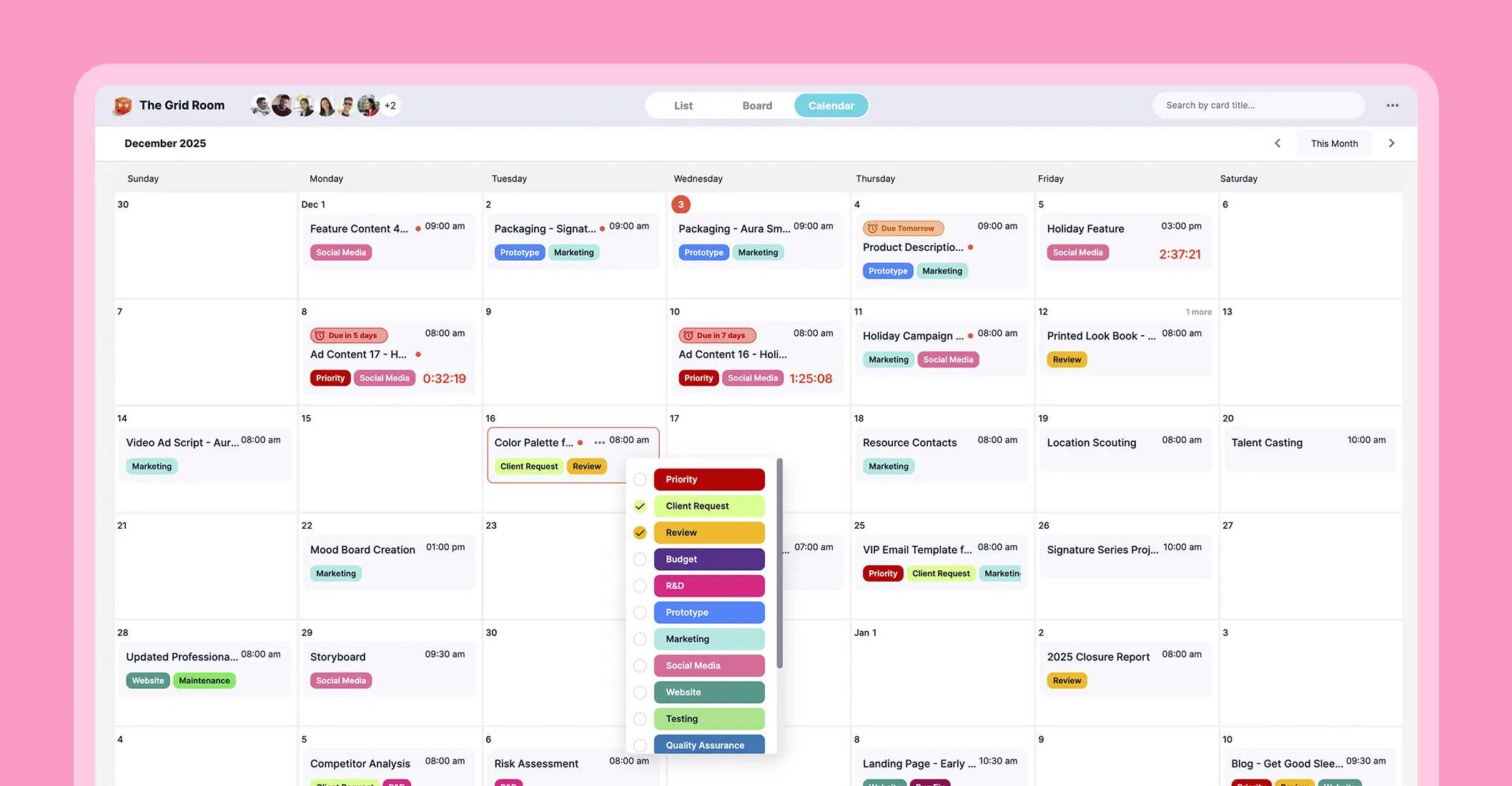
5. Set Realistic Timelines
Overly optimistic planning leads straight to burnout. We all underestimate how long things take. Look at how long similar tasks took in the past, then plan accordingly. Your team will thank you for setting timelines that feel fair and realistic.
6. Maintain Full Transparency
Half the delays come from miscommunication. Centralize updates, files, and progress in one shared space. This cuts the endless “checking in” messages because everyone can easily look back at updates.
7. Review, Learn, and Repeat
Once a project wraps, host a brief retrospective. What worked? What dragged? What can you simplify next time? Then actually apply those lessons to your next timeline. The best teams treat every project as a chance to improve the next one, not as a fire drill to recover from.
This is not micromanagement. It's the clarity your team needs. Over time, this process becomes second nature, and “late again” turns into “right on time.”
Conclusion
Deadlines slip. It happens. But with enough structure and habits, you can stop that cycle.
Start by applying one or two of these 7-step fixes on your next project. Once your team gets used to working this way, you’ll notice something shift. Projects run smoother, conversations are calmer, and deadlines stop feeling like emergencies. And if you need a single space to bring all of it together, Upprovall makes this easier for you.